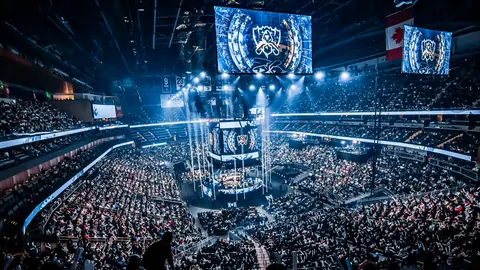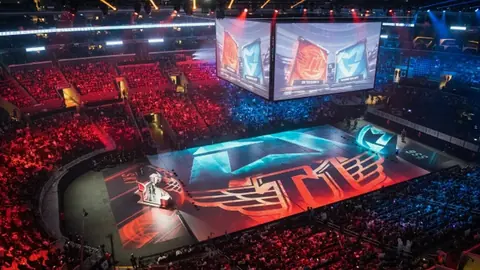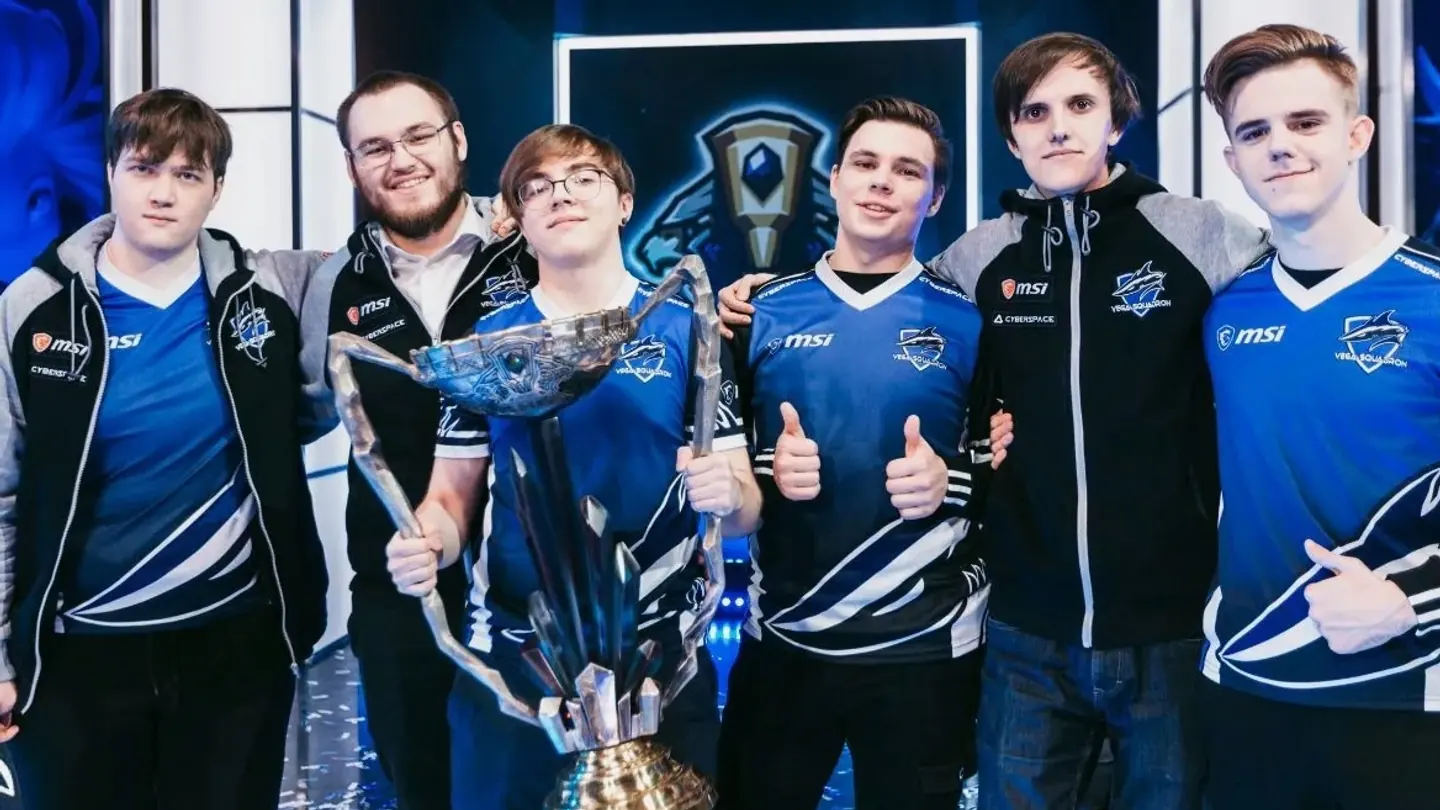
Riot's patch 26.23 notes change the League of Legends replay-download limit from ten per hour to fifty per day. The immediate temptation is to discuss only whether the allowance is generous enough. For players and aspiring analysts, a more useful question is how to make each selected replay earn its place in a review session. Collecting many files does not automatically produce better learning, and watching every defeat without a clear question can become an expensive way to repeat the same frustration.
This guide proposes a deliberate review workflow for personal games and publicly available professional broadcasts. Those are different sources: a client replay can offer different controls and information from a tournament video. The article does not claim that the new download policy applies identically to every broadcast archive or third-party service. Its practical focus is choosing evidence, reviewing decisions, and turning observations into a small change you can test.
Decide what you are trying to improve
Begin with one recurring situation rather than a verdict about your overall skill. You might want to understand why a recall leaves you late to a fight, why a lane becomes difficult after an early trade, or why you enter an objective area without a safe route. A specific question determines which game and which part of that game deserve attention.
Write the question before opening the replay. This prevents the review from drifting toward whichever mistake is most embarrassing or visually dramatic. If a new question appears, save it for another session instead of abandoning the original investigation. A focused review can be short and useful. An unfocused review can be long while producing no decision you can recognize in the next match.
Select contrasting examples
Choose a game where the situation went badly and another where it went reasonably well. The successful example helps reveal what good conditions looked like, while the difficult example shows where the sequence diverged. If you review only losses, you may conclude that every action was wrong simply because the final outcome was disappointing.
The pair does not need identical champions or matchups, but differences should be acknowledged. Perhaps one lane allowed an easier recall, or one team composition supplied safer access to river. Record those differences before comparing your decisions. The purpose is to identify a transferable pattern, not manufacture a controlled experiment from two matches whose conditions were actually very different.
Create a timestamp map before detailed analysis
Make a first pass and note the few moments relevant to the question. For a reset problem, those might include the wave before the recall, the moment the recall begins, the purchase, and the next arrival. This map turns a full match into a manageable sequence and keeps you from repeatedly searching for the same event.
Use short descriptions beside timestamps. A note such as wave left before recall is more useful than mistake because it identifies something observable. Save judgments for the second pass. You may discover that the recall itself was sensible and the problem started earlier, when a wave was handled differently or a teammate's movement changed the available options. A timeline helps locate the actual decision rather than the most visible consequence.
Pause before the outcome is known
At the key moment, stop before the play resolves. List the information available, the plausible options, and the cost of each. This is the central defense against hindsight. Once you know the enemy was waiting in a bush, every route toward it can feel obviously reckless. The useful question is whether the route was reasonable given the information you could have used then.
Include uncertainty explicitly. You might know one opponent's location, suspect another, and have no information about a third. Do not replace those states with the complete spectator picture. A good decision can sometimes lose, and a poor decision can sometimes escape punishment. Reviewing only the result teaches the wrong lesson when luck or opponent execution changes what happens after the commitment.
Trace the sequence one decision backward
When a moment looks impossible to play well, ask how you arrived there. A late objective entrance may begin with a delayed purchase, which may begin with an unnecessary extra wave. A lost trade may begin with using an ability for a small reward that removes your escape. The correction may be easier one decision earlier than at the dramatic failure itself.
Do not extend the chain indefinitely. Choose the earliest practical decision that directly changes the situation you are studying. Otherwise, the review becomes an argument that everything after the first minute was inevitable. The goal is a usable intervention. You want a moment you can recognize during ordinary play and a different action that remains realistic under the same information constraints.
Separate execution from planning
A failed combo can be a mechanical problem, a poor choice of timing, or an unreasonable attempt given the available tools. Those explanations call for different practice. Repeating the combo in a controlled setting can help execution, but it may not solve the habit of attempting it when a crucial enemy cooldown is ready.
Label the issue carefully. If the plan was reasonable but the input sequence failed, create a narrow mechanical drill. If the plan depended on missing information, improve the decision check. If the team composition required another player to act first, investigate the coordination visible in the replay. One broad label such as misplay can hide several distinct problems and make the next practice session less effective.
Use professional broadcasts as comparison material
A professional match can demonstrate a principle, such as preparing a wave before moving or preserving multiple entrances to an objective. It should not be copied as a script without context. Coordinated teams can rely on communication and shared preparation that may not exist in your own game. The visible action is only part of the environment that makes the play work.
When borrowing a lesson, translate it into a decision you can control. Instead of trying to reproduce a complete professional rotation, check whether your lane is in a state that lets you move without an excessive cost. The comparison becomes useful when it changes your understanding of a resource or timing window. It becomes misleading when it assumes your teammates will execute every unseen part of an organized plan.
Keep your notes small enough to revisit
A review document full of dozens of errors can feel thorough while being difficult to use. End each session with one observed pattern, one proposed adjustment, and one condition under which the adjustment applies. Attach the supporting timestamps so that you can revisit the reasoning if the idea stops making sense later.
For example, a hypothetical note might say that taking an extra wave before a planned objective repeatedly caused a late arrival; the proposed adjustment is to check the next objective before committing to that wave. This is a practice cue, not a universal rule to abandon farm. The condition matters because a useful habit must survive ordinary tradeoffs rather than becoming an instruction to follow blindly.
Test the adjustment over a defined period
Choose a small period for deliberate practice and track whether you recognized the relevant situation. Do not measure progress only through wins. A better recall can occur in a lost game, and a poor reset can remain hidden in a win. Record the decision and its immediate consequence before judging the entire match outcome.
At the next review, compare instances where you applied the cue with instances where you missed it. Ask whether the cue was clear enough and whether the expected benefit actually appeared. If not, revise the explanation. Deliberate practice is an iterative process, and a failed hypothesis can still improve your understanding. The important part is preserving enough detail to learn why it failed.
Respect versions, permissions, and file hygiene
Before downloading or sharing a replay, check the current client behavior and the applicable platform rules. Do not assume a file will remain usable forever or that a broadcaster's video can be redistributed without permission. A private learning note and a publicly uploaded compilation are different activities with different requirements.
Use descriptive filenames or a simple index that identifies the date, source, game version when known, and review question. Remove redundant working copies when they no longer serve a purpose, while preserving the notes that explain your conclusions. Efficient review is partly an information-management problem. A smaller, organized collection can remain useful longer than a large folder of files whose context you can no longer reconstruct.
A better target than downloading everything
The new daily limit is a reason to be intentional, but intentional review would be valuable under any allowance. Select a question, choose contrasting examples, pause before the outcome, and identify one earlier decision you can change. Then return to play and test the adjustment. That loop produces evidence about your learning rather than merely increasing the amount of footage you have stored.
If you finish a session with a clearer decision cue and a way to evaluate it, the replay has done useful work. If you finish with only a stronger feeling that you played badly, narrow the next session. The goal is not to prove that every mistake was avoidable. It is to improve the next decision that becomes recognizable while the game is still happening.
Review the cue after a break
Return to your final note later without immediately reopening the footage. Can you still explain the situation, the information available, and the proposed adjustment? If the note only makes sense while the exact clip is on screen, it may be too specific to guide ordinary play. Rewrite it as a recognizable condition while preserving the timestamp for verification.
Then identify one circumstance in which the cue should not apply. A recall habit designed for an upcoming objective may be inappropriate when a more urgent defensive task takes priority. Naming an exception prevents deliberate practice from becoming rigid behavior. The strongest review notes are compact enough to remember and conditional enough to remain sensible. That balance is a more practical measure of review quality than the number of matches downloaded or the length of the document produced after watching them.
Methodology, sources & limitations
The replay-limit figure was checked against Riot’s patch notes on November 20, 2026. The review routine is an original educational proposal, not a measured coaching intervention. Client replays and public broadcast videos have different controls, access conditions, and limitations.
Source check: . Hypothetical examples are educational. No private practice data, interviews, or unreported fieldwork is implied. Prepare a correction request.